Heat Pump Installation in Caversham, Reading
MCS-certified air source heat pump installation across Caversham, Caversham Heights, Emmer Green and Lower Caversham. £7,500 BUS grant supported. Free survey and written quote.
Last reviewed: 19 May 2026
-
£7,500 BUS grant
available toward an MCS-certified heat pump installation in Caversham. Statutory figure — gov.uk Boiler Upgrade Scheme.
-
MCS-certified installation
is required for the BUS grant and to protect manufacturer warranty terms. Every installer in our network is MCS-certified.
-
~3–4× the efficiency of a gas boiler
in typical UK conditions, measured by SCOP across a full heating season. Reading's design winter temperature is around −3.4°C.
Heat pumps in Caversham — the local context
Caversham sits on the north bank of the Thames and rises from the river into the lower Chiltern Hills — elevations from around 37 metres at the riverside up to 92 metres in Caversham Heights. The RG4 postcode area covers Caversham proper, Caversham Heights, Lower Caversham, Emmer Green and Caversham Park Village. Each has a distinct housing-stock pattern that affects how a heat pump installation runs in practice.
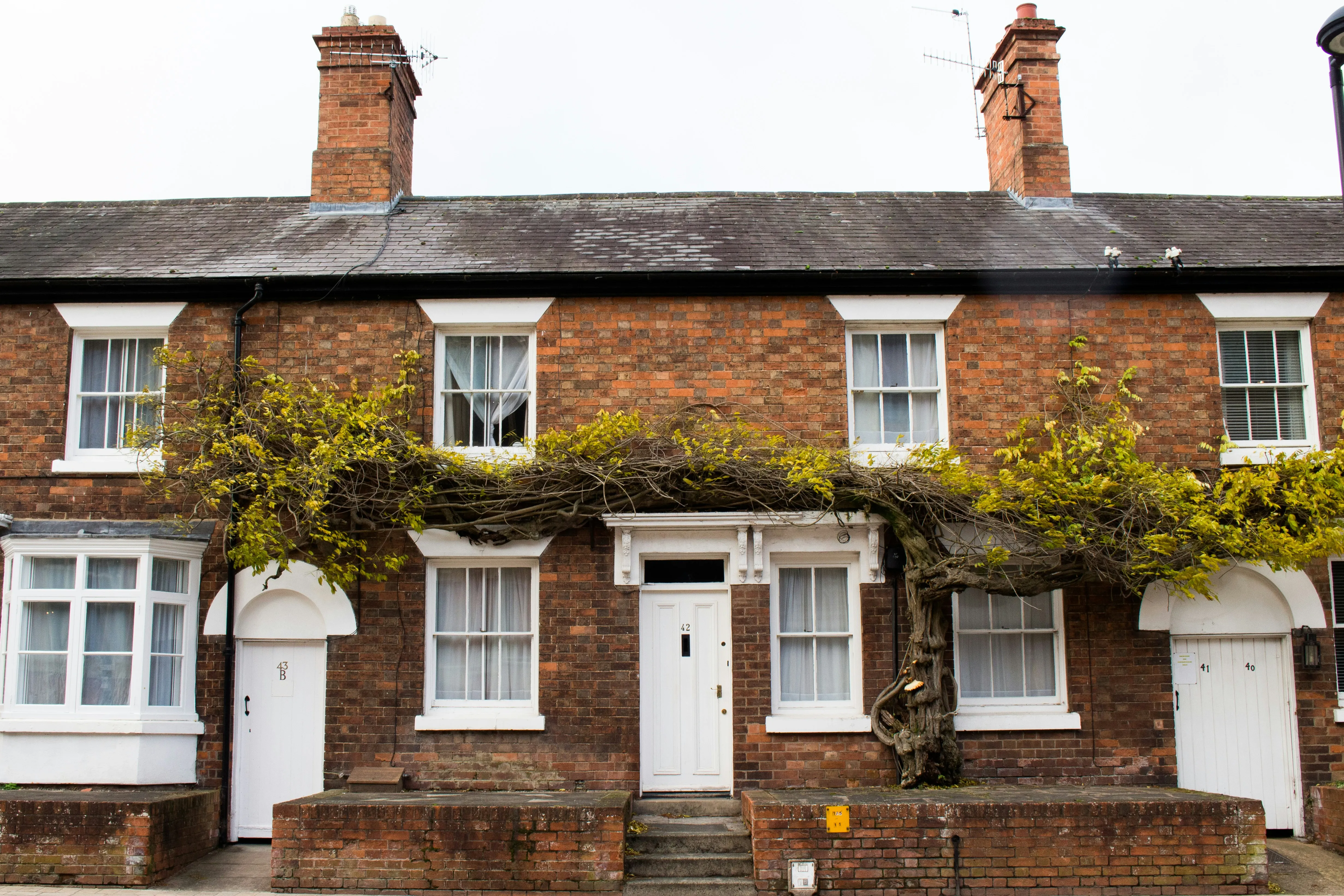
Lower Caversham and the streets around St Peter's Church are dominated by Victorian and Edwardian terraces — narrow plots, shared boundaries, compact rear gardens, and pre-cavity-wall solid brick construction. These are the properties where an R290 heat pump (with flow temperatures up to 75°C) typically makes the design straightforward: the existing radiator sizing remains workable, and the higher flow temperature accommodates the slightly higher heat-loss profile of solid-wall terraces. Outdoor unit siting in compact rear gardens with party-wall implications is the constraint most likely to need careful design work.
Caversham Heights, on the hill, contains substantial detached and semi-detached homes built largely between 1900 and 1930, on generous plots. These properties have ample siting space, often allow standard R32 monobloc heat pumps (lower flow temperatures, higher SCOP), and rarely run into outdoor-unit-placement constraints. A common misconception worth heading off: Caversham Heights itself is not a designated conservation area. The two active conservation areas in Caversham are St Peter's (centred on St Peter's Church, consecrated 1162, and the historic garden of Caversham Court on the Thames — its appraisal was updated in November 2018) and Surley Row (running from Emmer Green toward the old parish church, designated in its current form in September 2010).
Inside St Peter's or Surley Row, external alterations — including outdoor heat pump unit placement on a visible elevation — typically need planning permission rather than rely on Permitted Development rights. Early consultation with Reading Borough Council's conservation officer is the right starting point. Listed buildings within these areas (and elsewhere in Caversham) always need listed-building consent for external installations regardless of PD.
Caversham Park Village and the post-war estate streets are typical 1950s–60s cavity-wall stock — modest gardens, straightforward siting, and routine retrofit projects. Insulation upgrades to a contemporary U-value standard often pay back well alongside a heat pump installation here, and the survey will usually flag the fabric improvements that compound efficiency gains.
Caversham also has a handful of riverside considerations specific to Lower Caversham: parts of the area sit on the Thames flood plain, and the survey needs to reference the property's Flood Map for Planning before signing off the outdoor unit base height. Manufacturers specify minimum mounting heights for installations in flood-risk locations, and the design has to comply with both the warranty terms and the building-regulations guidance on water-exposure resilience. None of this prevents a heat pump installation — it just adds a design step.
Caversham Court, the riverside public park with a surviving ha-ha wall overlooking the Thames; Balmore Walk, the park with wide views across the town; and Clayfield Copse, a Local Nature Reserve on the northern edge — these are the recognisable Caversham features. None directly affect a heat pump installation, but if you live near them, the conservation-area lookups described above are worth a careful read before the survey.
Air source heat pump services we cover in Caversham
Our installer network covers Caversham across the four main service types — installation, servicing, maintenance, and repair. Every installer holds MCS certification, at least one major manufacturer's installer authorisation, and active engineer coverage of RG4. The same vetting standard applies across the network.
- Heat pump installation in Caversham — full installation from pre-installation survey through commissioning. The survey-driven design accounts for property type (Victorian terrace, Caversham Heights detached, Park Village estate, etc.), heat-loss profile, conservation-area constraints where applicable, and any required radiator upgrades. Most Caversham installations take three to six days on site.
- Heat pump servicing in Caversham — annual servicing covering refrigerant pressure checks, filter cleaning, condensate inspection, and a performance check against the commissioned baseline. Annual servicing is a manufacturer-warranty requirement on most heat pump brands; a typical service costs £100–£200.
- Heat pump maintenance contracts — quarterly visits, filter changes, weather-cover inspections, and priority response on faults. Useful for Caversham homeowners who want predictable upkeep and a contracted point of contact through the installer.
- Heat pump repair in Caversham — diagnosis and fix on systems that have stopped heating, are showing error codes, or are making unusual noise. Most repair callouts in the Caversham area are diagnosed on the first visit; our MCS-certified engineers carry the relevant manufacturer-authorised spares.
If you're weighing up which service you need, the homepage form takes a free-text description of the situation — we can route the enquiry to the right type of installer in our Caversham coverage.
BUS grant for Caversham homeowners
The Boiler Upgrade Scheme (BUS) is the UK government grant scheme that pays up to £7,500 toward an air source heat pump installation for eligible homeowners in England and Wales. Caversham sits in England, so Caversham homeowners are eligible if the property and installation meet three conditions:
- The property is owner-occupied or privately-rented (new-builds are excluded).
- The heat pump replaces an existing fossil-fuel heating system (gas, oil, LPG) or off-grid electric heating.
- The installation is carried out by an MCS-certified installer.
The grant is administered by Ofgem and is applied for by your installer on your behalf — Caversham homeowners don't fill in any paperwork directly. The grant amount is paid to the installer and your quote shows the cost after the grant has been deducted. The figure you sign for is the net amount you actually pay. No retroactive grant: the application must be made before the installation begins.
The £9,000 off-gas oil and LPG uplift, announced by DESNZ in April 2026, is expected to open in July 2026 and run to 31 March 2027. This is relevant for the small number of Caversham properties (typically rural-edge or older detached homes) that run on oil or LPG rather than mains gas — those properties will be able to claim the higher amount when the scheme opens. The standard £7,500 grant continues to apply to mains-gas-replacement and electric-replacement installations.
Full eligibility detail — including edge cases on heat-loss-certificate requirements, hybrid systems, and replacement installations — is on our cost and BUS grant page. The gov.uk Boiler Upgrade Scheme overview is the canonical reference.
Estimated cost in Caversham
Typical Caversham heat pump installations cost £8,000–£14,000 before the £7,500 BUS grant — so a net cost of £500–£6,500 for eligible properties. The actual figure depends on three factors, all of which the survey identifies for your specific property.
Property type and heat-loss profile. A well-insulated Caversham Park Village semi-detached on a routine 7 kW system sits at the lower end (£8,000–£10,000 gross). A larger Caversham Heights detached property with a 12 kW system, hot water cylinder upgrade, and a small radiator-upgrade list typically lands £11,000–£14,000 gross. Victorian and Edwardian terraces in Lower Caversham or near St Peter's typically need an R290 heat pump (modestly higher hardware cost than R32) plus a wider radiator-upgrade scope — middle of the range, £10,000–£13,000 gross.
Brand and refrigerant choice. Daikin and Mitsubishi Electric R32 monobloc systems are the most common choices for newer Caversham stock; Vaillant aroTHERM plus R290 is the routine pick for period properties needing higher flow temperatures. Worcester Bosch and Grant UK both have competitive UK pricing. Brand-comparison detail is in our UK heat pump brands guide.
Radiator upgrades and ancillary work. Most Caversham installations need a subset of radiator upgrades — typically two to four rooms with undersized emitters at the heat pump's lower flow temperature. Larger period properties may need a hot water cylinder if the existing one is unsuitable for heat pump duty. Electrical consumer unit upgrades are uncommon but occasionally needed. Conservation-area planning fees, where applicable, are usually under £250.
After the £7,500 BUS grant, the net cost of a heat pump installation in many Caversham properties is comparable to or only modestly higher than a like-for-like gas boiler replacement (£2,500–£4,500). Running costs, lifespan (heat pumps last 15–20 years vs 10–15 for gas boilers), and the trajectory of gas-versus-electricity pricing all favour the heat pump over the long run. Request a quote for a property-specific comparison.
Why MCS certification matters in Caversham
MCS — the Microgeneration Certification Scheme — is the UK quality-assurance standard for small-scale renewable heat and electricity installations, including air source heat pumps. Every installer in our Caversham network is MCS-certified, and the reason is practical: MCS certification is the entry condition for two things Caversham homeowners care about.
The first is the £7,500 BUS grant. Ofgem requires MCS-certified installation for grant eligibility. A non-MCS installer cannot apply for the grant on your behalf, and you cannot claim it retroactively. There are no exceptions — MCS is the gate.
The second is the manufacturer warranty. Daikin, Mitsubishi Electric, Vaillant, Worcester Bosch and Grant UK all require MCS-certified installation as a condition of the manufacturer warranty. Without MCS, the warranty is void on day one — leaving you exposed on what is typically a 7–10 year warranty period. MCS is the gate for warranty validity, separately from the grant.
MCS certification also requires installers to follow MIS 3005 (the installation standard) and MCS 020 (the noise standard, mandatory at 37 dB LAeq,5min since September 2025). These are the engineering standards that determine whether your heat pump runs at its design SCOP — and whether outdoor unit noise meets the threshold at your nearest residential window. Both matter especially in compact Caversham terrace gardens where the outdoor unit sits close to a neighbour's boundary.
Any MCS-certified installer's certificate number is verifiable on the live MCS register. Our vetting criteria — what we check beyond MCS — covers brand authorisations, engineer coverage, Reading-area presence, and Heat Geek tier where available.
Heat pump installation in Caversham — FAQ
How long does heat pump installation take in Caversham?
Most Caversham installations take three to six days on site, preceded by two to four weeks of preparation between the survey and installation start. Older properties along the river or in St Peter's conservation area can take longer at the preparation stage — planning consultation, listed-building checks, and radiator upgrades on undersized emitters all add lead time before installation begins. The on-site work itself rarely runs over six days for a domestic installation.
Do I need planning permission for a heat pump in Caversham?
Most Caversham heat pump installations fall under Permitted Development (PD), but there are two important exceptions. Properties inside the St Peter's Conservation Area (centred on St Peter's Church and Caversham Court on the Thames) or the Surley Row Conservation Area (running from Emmer Green toward the old parish church) often need planning permission rather than relying on PD. Listed buildings always need listed-building consent for external installations. Caversham Heights — despite its substantial period housing stock — is not a designated conservation area, so PD rights generally apply there. Your installer carries out the PD compliance check or prepares the planning application as part of pre-installation work.
What about Caversham Heights — is it a conservation area?
No. Caversham Heights is not a designated conservation area, despite the substantial Edwardian and 1900–1930s detached housing stock on the hill. Reading Borough Council's published conservation-area register lists St Peter's and Surley Row but not Caversham Heights itself. That said, individual listed buildings in the Heights still require listed-building consent, and any property abutting a conservation-area boundary should be checked individually on the Reading planning portal.
Am I eligible for the £7,500 BUS grant in Caversham?
Most Caversham homeowners are eligible. The Boiler Upgrade Scheme covers owner-occupied and privately-rented properties in England and Wales where the heat pump replaces an existing fossil-fuel system (gas, oil, or LPG) or off-grid electric heating, and the installation is carried out by an MCS-certified installer. New-builds are excluded. The grant is £7,500 fixed (£9,000 for off-gas oil and LPG replacements when the DESNZ uplift opens, expected July 2026 to 31 March 2027). The grant is applied for by your installer; you don't handle the paperwork.
How much does heat pump installation cost in Caversham?
Typical Caversham heat pump installations cost £8,000–£14,000 before the £7,500 BUS grant — so £500–£6,500 net for eligible properties. Caversham Heights detached properties with larger heat-loss profiles sit toward the upper end (typically £11,000–£14,000 gross). Victorian and Edwardian terraces in Lower Caversham or the St Peter's area typically need an R290 heat pump for higher flow temperatures plus a subset of radiator upgrades — pushing costs toward the middle of the range (£10,000–£13,000 gross). The cost-and-grant page covers the full picture; the survey gives you a property-specific figure.
Are heat pumps suitable for Victorian terraces in Caversham?
Yes — most Victorian Caversham terraces, including those in Lower Caversham and along the streets around St Peter's, are heat-pump-suitable with the right specification. Two design choices typically apply: an R290 heat pump (capable of higher flow temperatures up to 75°C) to work with the existing emitter sizing, and a subset of radiator upgrades on the rooms with the largest exposed wall area. Solid-wall insulation, where the property is unrendered and unaltered, is often part of the conversation alongside the heat pump. Outdoor unit siting is the design constraint most likely to need conservation-officer consultation in those areas.
Will I need new radiators with a heat pump in a Caversham home?
Often a subset, rarely all of them. Heat pumps run at lower flow temperatures than gas boilers, so radiators sized for an old boiler at 70°C flow may be undersized at the heat pump's 45–55°C target. A heat-loss-and-emitter assessment during the survey identifies which radiators (if any) need replacing. Caversham Heights properties with substantial double-panel radiators often need fewer upgrades than the cast-iron-era stock common in Lower Caversham or the older terraces near St Peter's. The cost of any required upgrades is included in your quote.
Can I install a heat pump in a Lower Caversham riverside property?
Yes, with one extra design consideration: the Thames flood-plain sections of Lower Caversham need outdoor unit base height that places the equipment above the local flood-risk level. Heat pump manufacturers specify minimum mounting heights for installations in flood-risk areas, and the survey will reference your property's Flood Map for Planning. The heat pump system itself is unaffected by riverside siting; the design simply needs to account for water exposure on the base mount. Insurance and the manufacturer warranty both typically require compliance with the flood-resilience guidance.
Get a Caversham heat pump quote
Submit the form on the homepage with your RG4 postcode and a note about your property. We'll route the enquiry to an installer in our network whose coverage of Caversham and brand portfolio fit. The survey is free; the written quote shows the actual figure you'd pay after the £7,500 BUS grant has been deducted, with any required radiator upgrades or hot water cylinder costs included.
Nearby Reading-area neighbourhoods
- Reading town centre Victorian terraces, period flats, and modern apartments — central RG1 across the Thames from Caversham.
- Tilehurst Hill-location mixed stock in RG30 — Victorian terraces, mid-century semi-detached, and modern estates west of Reading.
See all Reading-area neighbourhoods we cover.